

ACTA ACCLA 2012
COINS OF THE FIVE GOOD EMPERORS
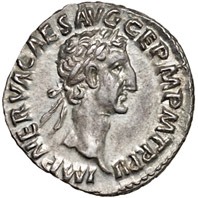 Nerva
Nerva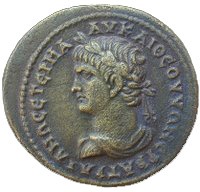 Trajan
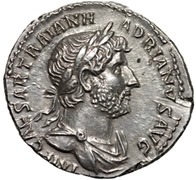 Hadrian
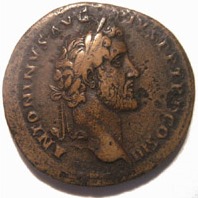 Antoninus
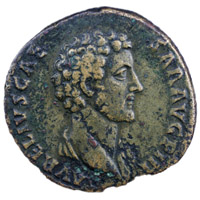 Marcus
Between the years 96 and 180 CE, five consecutive Roman Emperors succeeded to the throne following their adoption by either their predecessor or by the Senate. These "adoptive" Emperors were Nerva (96-98 CE), Trajan (98-117 CE), Hadrian (117-138 CE), Antoninus Pius (138-161 CE), and Marcus Aurelius (161-180 CE).
Adoption of an appropriate heir in the absence of a natural son was an established Roman practice - Julius Caesar adopted Octavian, Octavian (as Augustus) adopted Tiberius, and Claudius adopted Nero. However, the series of five adoptive Emperors in a row was exceptional. The period of the Five Good Emperors was marked by peaceful transitions of power and relative economic and political stability.
Niccolò Machiavelli, the famed political philosopher, considered these adoptive Emperors to be extremely able and talented rulers in contrast to those Emperors who had succeeded to the throne by birth. In 1503, Machiavelli coined the term Five Good Emperors to describe them [ 1 ].
The following pages feature a selection of coins that portray the Five Good Emperors - Nerva, Trajan, Hadrian, Antoninus Pius, and Marcus Aurelius provided by ACCLA members.
CITATIONS & FOOTNOTES
1. Machiavelli, N. 1503. Discourses on the First Decade of Titus Livy, Book I, Chapter 10.